

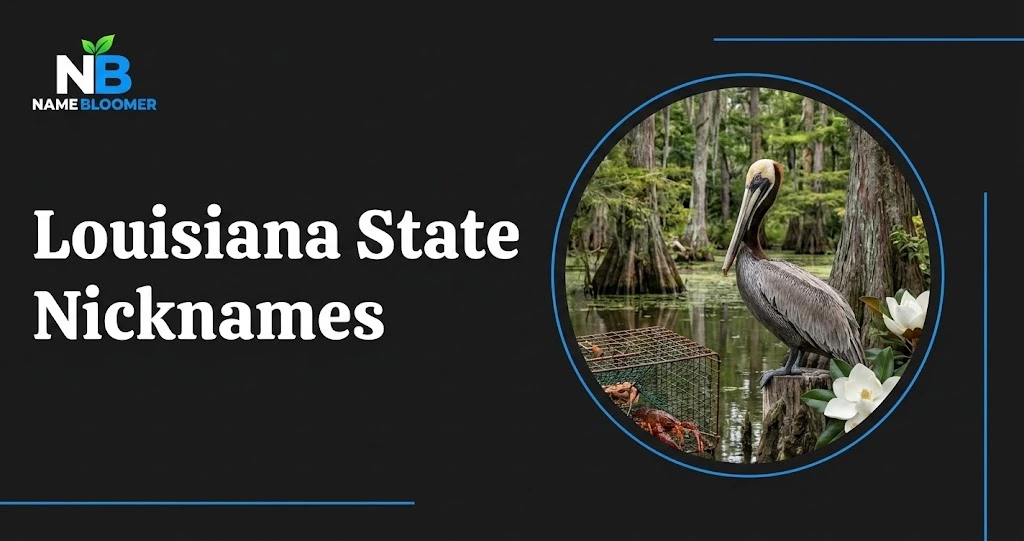
Louisiana has many nicknames. Each one comes from a real story. Some point to nature, while others point to food, music, or history. This guide walks through every major group, so you can see where each title began.
You will see how each name started. You will also learn why locals still use it today, and how these names connect to real events, people, and places across Louisiana.
Advantages of Louisiana State Nicknames
These names bring instant personality to any project. A team, brand, or school page can feel more alive with a Louisiana theme. They also help people connect faster to the state’s culture and story.
| Nickname | Meaning | Origin |
|---|---|---|
| The Pelican State | Official state bird symbol | Brown pelicans line the Gulf Coast |
| The Bayou State | Refers to bayou waterways | Slow streams run through the lowlands |
| The Creole State | Celebrates Creole heritage | Mixed French, Spanish, African roots |
| The Sugar State | Major sugar production | Sugarcane farming since the 1700s |
| Sportsman’s Paradise | Hunting and fishing hub | Rich wildlife across wetlands |
| The Boot | State shape looks like a boot | Geographic outline on the map |
| Child of the Mississippi | River shaped the land | River sediment built the coast |
| Cajun Country | Home of Cajun culture | Acadian settlers arrived in the 1700s |
| Jazz State | Birthplace of jazz music | New Orleans jazz scene, early 1900s |
| Mardi Gras State | Famous carnival season | French tradition brought to New Orleans |
| Gumbo State | Named after the famous dish | Blended cuisine from many cultures |
| Dixieland | Part of the Deep South | Traditional Southern identity |
| Festival Capital | Hosts festivals all year | Hundreds of local celebrations |
| Crawfish Country | Leading crawfish producer | Wetlands ideal for crawfish farming |
| Swamp State | Extensive wetland areas | Vast cypress swamps down south |
| Voodoo State | Historic spiritual practices | African traditions in New Orleans |
| Zydeco State | Home of zydeco music | Creole music tradition |
| Hospitality State | Southern warmth and welcome | Reputation for friendly locals |
| The Crossroads | Cultural meeting point | Trade routes and river travel |
| Pirate State | Jean Lafitte’s history | Historic pirate activity along the coast |
| Tabasco State | Hot sauce origin | Avery Island Tabasco production |
| King Cake State | Mardi Gras pastry tradition | Seasonal carnival custom |
| Fleur-de-lis State | French symbol of heritage | French colonial roots |
| Gator State | Alligator population | Abundant alligators in the wetlands |
| Delta State | Mississippi Delta region | River delta geography |
| Beignet State | Famous fried pastry | New Orleans café tradition |
| Second Line State | Parade brass band custom | New Orleans funeral tradition |
| Levee State | Flood protection system | Mississippi River levees |
| Lagniappe State | ‘A little extra’ concept | Creole tradition of small gifts |
| Wetlands State | Coastal marsh ecosystem | Large share of U.S. coastal wetlands |
| Hurricane State | Frequent storm exposure | Gulf Coast weather pattern |
| Big Easy State | Relaxed New Orleans pace | City’s laid-back lifestyle |
| French Louisiana | Colonial French heritage | Settled by France starting in 1682 |
| Cypress State | Ancient cypress forests | Old-growth trees across the swamp |
| River Delta Land | Shaped by river flow | Mississippi River outlet region |
Famous Nicknames for Louisiana State
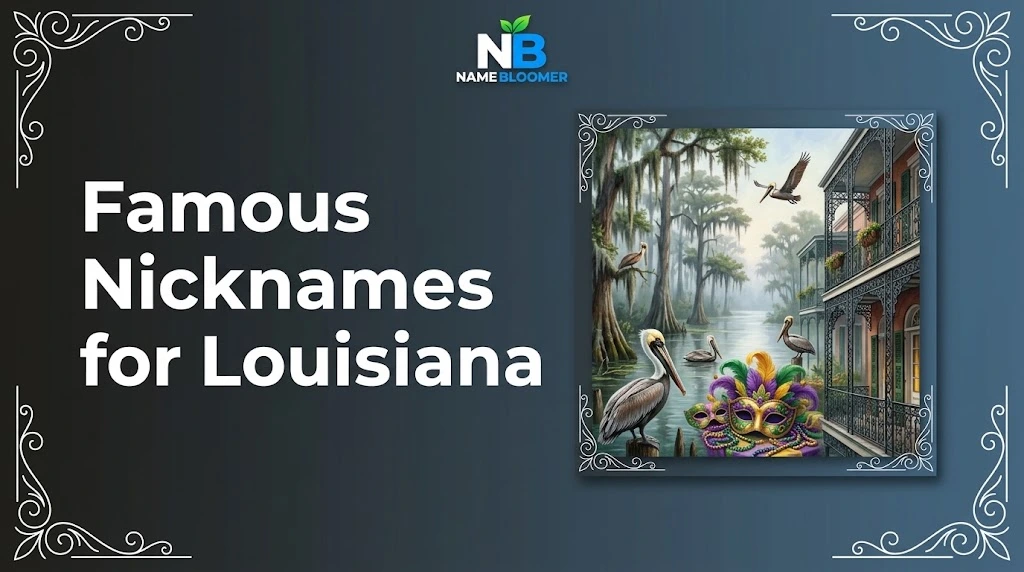
This list widens the net further. It mixes historic titles with names tied to daily bayou life, food, and celebration across the state. Together, they show just how layered Louisiana’s identity really is.
| Nickname | Meaning | Origin |
|---|---|---|
| Pelican State | Official bird symbol | Adopted around statehood in 1812 |
| Bayou State | Wetland waterways | Named for slow bayou networks |
| Sportsman’s Paradise | Hunting and fishing culture | Promoted heavily in 1960s tourism |
| Creole State | Mixed cultural heritage | French, Spanish, African blend |
| Sugar State | Sugarcane production | Historic sugar industry |
| The Crossroads | Cultural meeting point | Trade routes and river travel |
| French Louisiana | French colonial roots | Settled by France starting in 1682 |
| Tabasco State | Hot sauce birthplace | McIlhenny Company, Avery Island |
| Wetlands Wonderland | Huge coastal marshland | Home to major U.S. wetlands |
| Hurricane Alley | Storm-prone location | Sits along the Gulf storm path |
| Big Easy State | Relaxed New Orleans vibe | City’s laid-back reputation |
| Levee State | Flood protection systems | Mississippi River levee network |
| Zydeco Land | Home of zydeco music | Creole music tradition |
| Fleur-de-lis State | French royal symbol | Colonial French heritage |
| Delta State | Mississippi Delta region | River delta geography |
| Voodoo State | Historic spiritual practices | African traditions in New Orleans |
| Cypress State | Ancient cypress forests | Old-growth swamp trees |
| Second Line State | Parade brass band custom | New Orleans funeral tradition |
| Lagniappe State | ‘A little something extra’ | Creole tradition of small gifts |
| Gator State | Alligator population | Wetlands full of alligators |
| Sportsman’s State | Outdoor recreation identity | Hunting and fishing economy |
| Crawfish Capital | Leading crawfish producer | Supplies most U.S. crawfish |
| Gumbo Nation | Blended cultural cuisine | Reflects Louisiana’s food mix |
| Jazz Cradle | Birthplace of jazz | New Orleans music history |
| Mardi Gras Land | Carnival season fame | Pre-Lenten celebration tradition |
| Bourbon Street State | Famous nightlife district | New Orleans entertainment scene |
| Plantation State | Historic river-road plantations | Antebellum agricultural economy |
| Catfish State | Popular catfish farming | Aquaculture along the rivers |
| River Road State | Historic river route | Plantation homes along the Mississippi |
| Praline Land | Sweet candy tradition | Creole confection heritage |
| Boudin Belt | Cajun sausage tradition | Rural Cajun parish cooking |
| Etouffee Territory | Rich Cajun stew dish | Staple of southern Louisiana cooking |
| Muffuletta State | Italian sandwich origin | Created in a New Orleans grocery |
| Spanish Moss Land | Common tree-draping plant | Moss common in humid swampland |
| Magnolia Neighbor | Nearby to the Magnolia State | Regional Deep South identity |
Nicknames for Louisiana’s State Bird
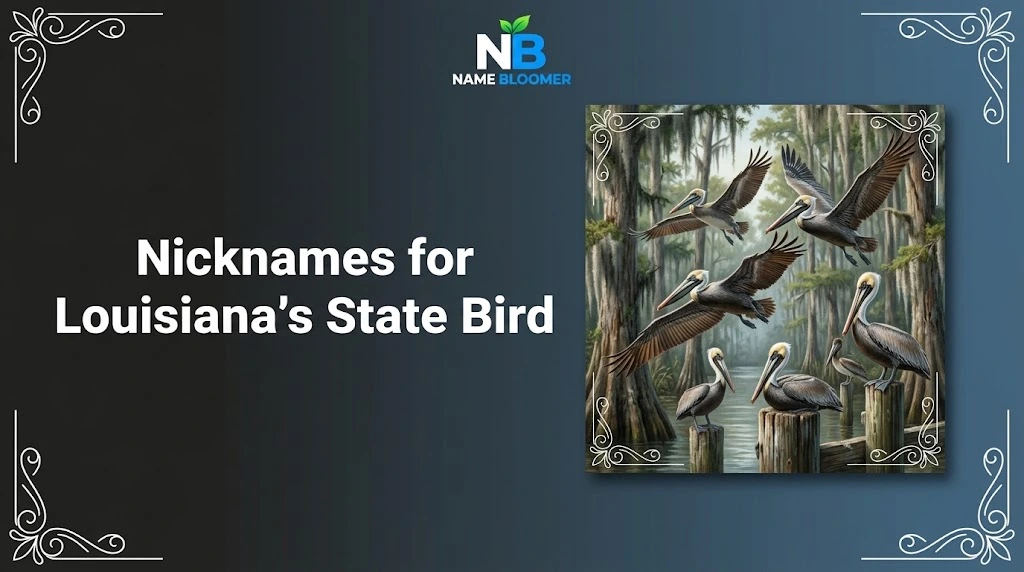
The brown pelican became the official bird in 1966. It once nearly vanished from pesticide damage, then made a strong comeback along the coast through years of conservation work and habitat recovery.
| Nickname | Meaning | Origin |
|---|---|---|
| Skyward Scooper | Dives fast to grab fish | Common feeding motion |
| Coastal Patrolman | Flies low along shorelines | Regular shoreline sightings |
| Deep Pouch Flyer | Large pouch under its bill | Physical build |
| Salt Marsh Regular | Common in salty marshland | Coastal marsh habitat |
| Fisherman’s Rival | Competes for the same catch | Local angler jokes |
| Wetland Ambassador | Represents Louisiana’s marshes | Wide marsh presence |
| Rebound Bird | Bounced back from near loss | 1970s population recovery |
| Emblem of the Coast | Chosen as a state symbol | Featured on official seal |
| Long Wing Glider | Glides for long stretches | Flight style |
| Shoreline Sentry | Watches the coastline closely | Perched near open water |
| Barrier Reef Nester | Nests along barrier islands | Breeding location |
| DDT Survivor | Lived through a chemical crisis | Pesticide-era history |
| Gulf Coast Native | Native bird of the Gulf region | Regional origin |
| Deep Diver Bird | Plunges deep for fish | Hunting depth |
| Southern Skyline Bird | Common sight in southern skies | Frequent flight pattern |
| Feather and Pouch | Combines two key features | Distinct anatomy |
| River Mouth Regular | Common near river mouths | Estuary habitat |
| State Seal Bird | Appears on the official seal | Government emblem use |
| Big Wing Bird | Known for its wide wingspan | Physical size |
| Fishery Watcher | Hovers near fishing boats | Observed near shrimp boats |
| Cypress Swamp Visitor | Occasionally seen in swamps | Wider habitat range |
| Protected Flyer | Once listed as endangered | Federal protection history |
| Sunrise Diver | Feeds most actively at dawn | Morning feeding pattern |
| Marsh Grass Nester | Builds nests in marsh grass | Breeding habit |
| Silver Wave Bird | Skims silver water at dusk | Evening flight pattern |
| Bay Watcher | Common along Louisiana bays | Bay habitat |
| Colonial Coast Bird | Nested here since colonial times | Long historic presence |
| Chick Provider | Feeds young from its pouch | Parenting behavior |
| Recovery Icon | Symbol of wildlife recovery efforts | Conservation success story |
| Open Water Hunter | Hunts over open bay water | Feeding zone |
| Feathered State Icon | Officially tied to Louisiana pride | State symbol status |
| Windward Flyer | Flies against strong Gulf winds | Weather adaptation |
| Pelican Rock Nester | Nests on rocky coastal points | Nesting site choice |
| Bill Pouch Angler | Uses its bill like a net | Fishing technique |
| Habitat Rebuilder | Population rebuilt through habitat work | Conservation program result |
Funny Names for Louisiana State
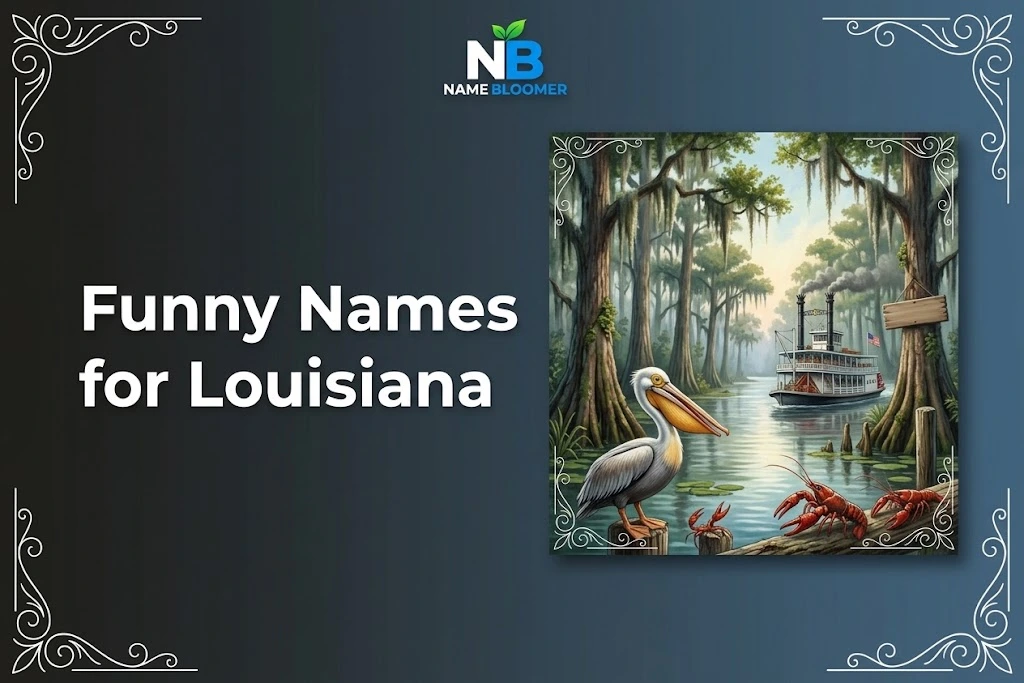
Locals love to laugh at themselves too. These names poke fun at heat, bugs, and Mardi Gras chaos, along with everyday quirks that make life here feel a little different from anywhere else.
| Nickname | Meaning | Origin |
|---|---|---|
| Boil Pot Bosses | Backyard crawfish boil hosts | Weekend cooking tradition |
| Porch Swing Regulars | Front porch evening sitters | Slow Southern evenings |
| Sweet Tea Sippers | Iced tea lovers everywhere | Southern drink habit |
| Umbrella Skippers | Locals who ignore rain warnings | Frequent afternoon showers |
| Roux Stirrers | People who never rush a roux | Cajun cooking patience |
| Snowball Stand Fans | Shaved ice regulars in summer | Hot weather treat |
| Float Trip Regulars | River tubing weekend crowd | Summer float trips |
| Weather App Refreshers | Constant hurricane season checkers | Storm tracking habit |
| Pothole Navigators | Skilled at dodging bad roads | Local road humor |
| Fan Blade Sleepers | Nap under a slow ceiling fan | Hot house afternoons |
| Iced Coffee Loyalists | Cold coffee even in winter | Local coffee habit |
| Backyard Boil Judges | Rate every neighbor’s seasoning | Crawfish boil rivalry |
| Parade Route Planners | Map out every Mardi Gras route | Carnival season planning |
| Bug Spray Regulars | Never leave home without spray | Mosquito season reality |
| Grill Smoke Chasers | Follow the smell of a smoker | Backyard cookout culture |
| King Cake Baby Finders | Hunt for the hidden trinket | Carnival cake tradition |
| Rain Boot Owners | Keep boots by the door always | Frequent flooding streets |
| Fried Everything Fans | Will fry almost any food | Local fry-first cooking style |
| Storm Shutter Installers | Ready shutters before every season | Hurricane prep routine |
| Late Night Beignet Runners | Craving sweets after midnight | Café Du Monde late crowd |
| Front Yard Boil Builders | Set up big pots outdoors | Neighborhood cooking events |
| Two-Step Learners | Everyone eventually learns the dance | Local dance culture |
| Accent Guessers | Try to place every local accent | Regional dialect variety |
| Church Fish Fry Regulars | Friday fish fry attendees | Community tradition |
| Cold Front Celebrators | Get excited over mild weather | Rare cool days |
| Trail Ride Followers | Join weekend horseback trail rides | Rural riding tradition |
| Levee Walkers | Evening walkers along the levee | Common exercise spot |
| Second Helping Askers | Always go back for more food | Southern hospitality habit |
| Gumbo Debate Club | Argue about the right gumbo recipe | Recipe rivalry humor |
| Front Door Rockers | Keep a rocking chair on the porch | Common porch furniture |
| Fais Do-Do Dancers | Dance until the party ends | Traditional Cajun dance party |
| Pepper Sauce Carriers | Bring hot sauce everywhere they eat | Local seasoning habit |
| Parish Line Debaters | Argue about which parish is best | Local pride rivalry |
| Crawfish Peeling Pros | Peel crawfish faster than anyone | Boil season skill |
| Backroad Shortcut Experts | Know every shortcut around town | Local driving knowledge |
Nicknames from the Bayou
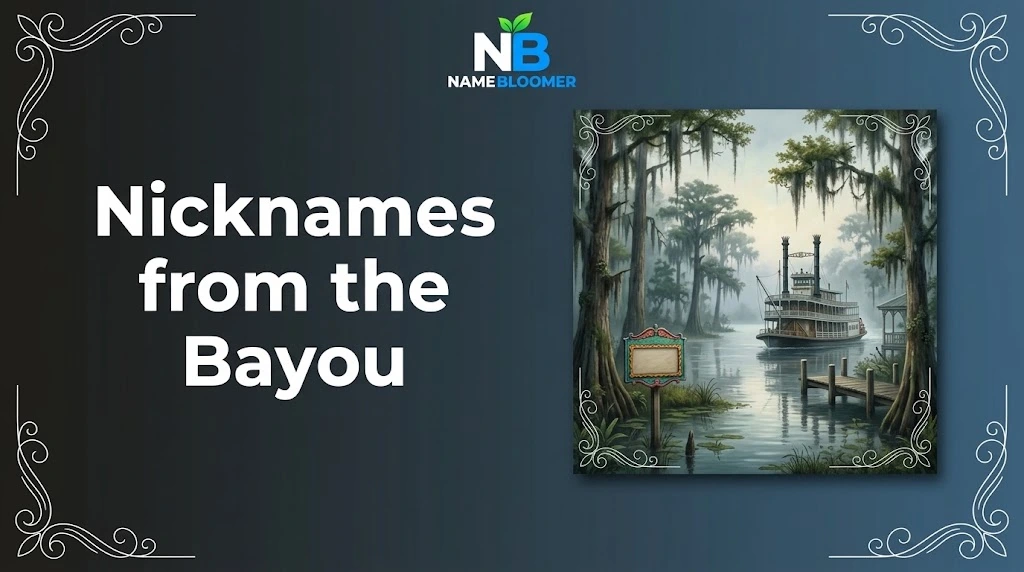
Slow rivers and swamps shaped much of the state’s history. These names all trace back to water, from quiet fishing spots to wide cypress channels running through the southern parishes.
| Nickname | Meaning | Origin |
|---|---|---|
| The Bayou State | Slow-moving waterways | Bayou networks across the state |
| Swamp State | Extensive wetland areas | Vast cypress swamps down south |
| Cajun Bayou Land | Cajun life plus geography | Southwestern Louisiana culture |
| Crescent City State | New Orleans river bend | City curves along the Mississippi |
| Blues Bayou | Delta blues influence | Music tied to river culture |
| Gator Alley | Large alligator population | Common wetland predator |
| Marsh Kingdom | Extensive marsh terrain | Coastal wetland ecosystem |
| Cypress Shadow | Cypress tree cover | Trees define the swamp look |
| Pirogue Country | Traditional canoe travel | Old-style bayou transportation |
| Moss Hanger Land | Spanish moss on trees | Common bayou plant life |
| Tidewater Trail | Coastal water routes | Waterways near the Gulf |
| River Runner State | Rivers cutting through land | Multiple major rivers present |
| Backwater Land | Slow, hidden waterways | Remote bayou channels |
| Duckweed Delta | Green-covered still water | Common bayou plant cover |
| Heron Haven | Common wading bird habitat | Herons nest along bayous |
| Crawfish Trench | Crawfish farming ponds | Flooded fields for crawfish |
| Boat Launch Belt | Frequent boating access points | Popular bayou boat ramps |
| Wading Bird Land | Home to many wading birds | Marsh and swamp habitat |
| Fog Bayou | Morning mist over the water | Common early bayou scene |
| Cane Field Creek | Waterways near sugar fields | Sugarcane farming regions |
| Tupelo Swamp | Tupelo tree wetlands | Common swamp tree species |
| Turtle Log Territory | Turtles sunning on logs | Common bayou wildlife sight |
| Egret Edge | White egrets along banks | Common bayou bird sighting |
| Water Lily Waterway | Lily-covered slow water | Common bayou plant scenery |
| Fisherman’s Fork | Popular fishing bayou spot | Local fishing tradition |
| Duck Blind Territory | Waterfowl hunting spots | Popular duck hunting land |
| Marsh Grass Maze | Winding grassy channels | Coastal marsh geography |
| Bald Cypress Bend | Curving cypress-lined water | Iconic swamp tree scenery |
| Crawfish Pond Parish | Farming ponds for crawfish | Aquaculture region |
| Muddy Water Land | Sediment-rich river water | Mississippi River influence |
| Catfish Channel | Popular catfish habitat | River and bayou fishing |
| Levee Line Land | Land protected by levees | Flood control structures |
| Oyster Bayou | Coastal oyster harvesting | Gulf-adjacent bayou areas |
| Shrimp Boat Bayou | Shrimping industry waterways | Coastal fishing economy |
| Marsh Mallow Land | Wetland plant references | Coastal marsh vegetation |
What These Louisiana Names Mean
Here is a closer look at what each title truly stands for. Many carry deep roots in colonial history, farming, or the mix of cultures that shaped this part of the country.
| Nickname | Meaning | Origin |
|---|---|---|
| The Pelican State | Official bird represents the state | Pelicans on flag and seal |
| The Bayou State | Celebrates slow-moving waterways | Extensive bayou systems |
| Sportsman’s Paradise | Premier hunting and fishing spot | Rich wildlife and abundant game |
| The Creole State | Honors mixed heritage | French, Spanish, African blend |
| The Sugar State | Major sugar producer | Sugar industry since the 1700s |
| Child of the Mississippi | Formed by river deposits | Sediment built the land mass |
| Cajun Country | Home of Acadian descendants | French Canadians settled in 1755 |
| The Boot State | Shaped like a boot | Map outline resembles footwear |
| Jazz Capital | Birthplace of jazz music | New Orleans created the genre |
| Festival State | Year-round celebrations | Hundreds of festivals annually |
| Gumbo State | Famous Creole stew | Dish reflects cultural mixing |
| Voodoo Land | Historic spiritual practices | African traditions plus Catholicism |
| Crawfish Country | Leading crawfish producer | Wetlands support crawfish farming |
| King Cake Kingdom | Mardi Gras tradition | Purple, green, gold pastry |
| Zydeco Zone | Unique musical genre | Creole music style originated here |
| Gator Alley | Large alligator population | Swamps full of reptiles |
| Swamp Paradise | Extensive wetland ecosystems | Largest swamp system in America |
| Carnival Capital | Mardi Gras headquarters | World-famous celebration |
| French Quarter Fame | Historic New Orleans district | Colonial French architecture |
| Bourbon Street Base | Legendary entertainment strip | Famous nightlife destination |
| Beignet Haven | Iconic French pastries | Café Du Monde made them famous |
| Tabasco Territory | Hot sauce birthplace | Avery Island McIlhenny Company |
| Po’Boy Paradise | Signature sandwich state | New Orleans invented this sub |
| Second Line State | Parade brass band tradition | Funerals turned into celebrations |
| Lagniappe Land | ‘A little something extra’ | Creole term for bonus gift |
| Pirate’s Playground | Jean Lafitte’s operations | Buccaneers hid in bayous |
| Muffuletta Mecca | Italian sandwich creation | New Orleans Central Grocery |
| Fleur-de-lis Forever | French royal symbol | Louisiana flag features this emblem |
| Laissez Les Bon Temps | ‘Let the good times roll’ | State motto captures spirit |
| Hurricane Alley | Frequent storm target | Gulf Coast location vulnerable |
| Sportsman’s Trail | Outdoor recreation network | Parks and wetland trails |
| River Road Heritage | Historic plantation route | Mississippi River road homes |
| Catfish Kingdom | Popular aquaculture industry | Catfish farming along rivers |
| Boudin Border | Cajun sausage tradition | Rural parish cooking custom |
| Praline Province | Sweet candy heritage | Creole confection tradition |
LSU’s Nickname
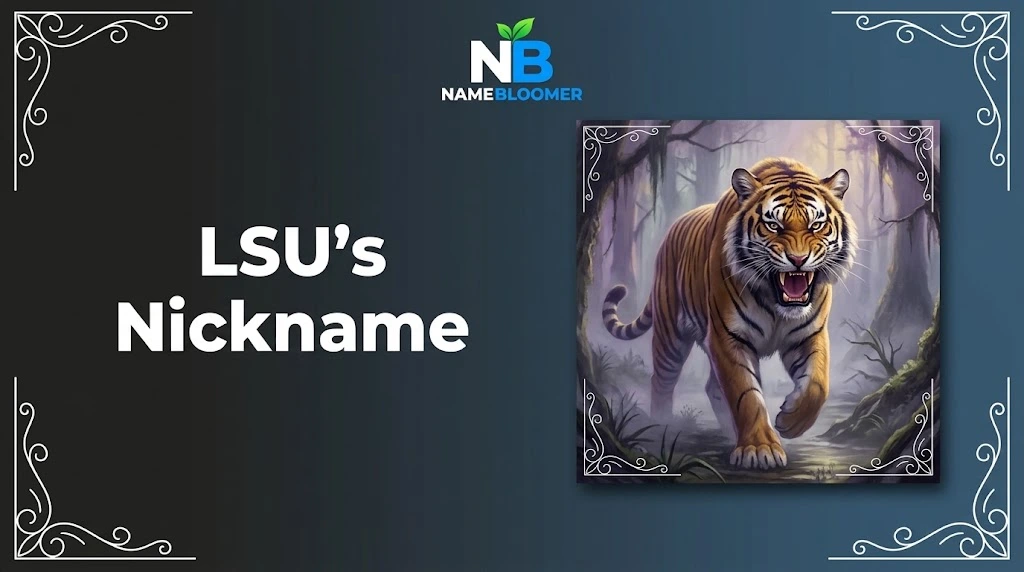
LSU carries one of the South’s most famous mascots. The Tigers name has stuck since 1896, growing into a full identity across campus, football season, and statewide loyalty.
| Nickname | Meaning | Origin |
|---|---|---|
| LSU Tigers | Represents strength and spirit | Named after the Louisiana Tigers in 1896 |
| Fighting Tigers | Aggressive athletic performance | Extension of the original Tigers name |
| Bayou Bengals | Tiger mascot plus bayou land | Blends Bengal tiger with Louisiana geography |
| Purple and Gold | Official school colors | Colors chosen back in 1893 |
| Death Valley Dwellers | Home stadium reputation | Tiger Stadium’s intense crowd noise |
| The Pride of Louisiana | Statewide university pride | Reflects statewide support |
| Geaux Tigers | Cajun-French spelling of ‘Go Tigers’ | Reflects Louisiana’s French roots |
| Tiger Nation | Loyal, large fan community | Statewide alumni and fan network |
| LSU Faithful | Dedicated supporters and alumni | Unwavering fan loyalty |
| Baton Rouge Tigers | Team’s home city | Campus located in the capital |
| SEC Tigers | Conference membership | Part of the SEC since 1933 |
| Championship Tigers | Multiple national titles | Football titles across several decades |
| Roaring Tigers | Loud, passionate fan support | Stadium atmosphere and intensity |
| Golden Tigers | Gold in school colors | Highlights prestigious standard |
| Louisiana’s Team | Represents the entire state | Statewide fan base |
| Mike’s Team | Named after live mascot Mike | Mascot tradition since 1936 |
| Striped Warriors | Tiger stripes plus fighting spirit | Physical and competitive traits |
| Jungle Cats | Playful tiger reference | Informal mascot nickname |
| The Bengals | Shortened tiger species name | Used interchangeably with Tigers |
| LSU Pride | School spirit and tradition | Collective institutional excellence |
| Tiger Tribe | Community and belonging | Fan unity and culture |
| Purple Reign | Wordplay on color and dominance | Periods of athletic supremacy |
| Championship Nation | Winning tradition across sports | Success beyond just football |
| Saturday Night Tigers | Prime-time home game tradition | Famous night games at the stadium |
| Tigerland Legends | Historic players and moments | Storied athletic history |
| The Roar | Collective fan noise and energy | Intimidating crowd noise |
| LSU Legacy | Tradition through generations | Long-standing excellence |
| Tiger Excellence | Academic and athletic achievement | Institutional quality |
| Southeastern Tigers | Regional geographic identifier | Places LSU within the South |
| Championship Caliber | Elite competitive standard | Consistently high performance |
| Death Valley Faithful | Loyal stadium crowd | Home field advantage tradition |
| Bengal Nation | Alternate fan base term | Tiger species reference |
| Tiger Stadium Thunder | Loud stadium environment | Crowd noise reputation |
| Purple Pride Parade | Game day fan tradition | Tailgating and school spirit |
| Old War Skule | Historic campus nickname | Military history of the campus |
The Angola Prison Nickname
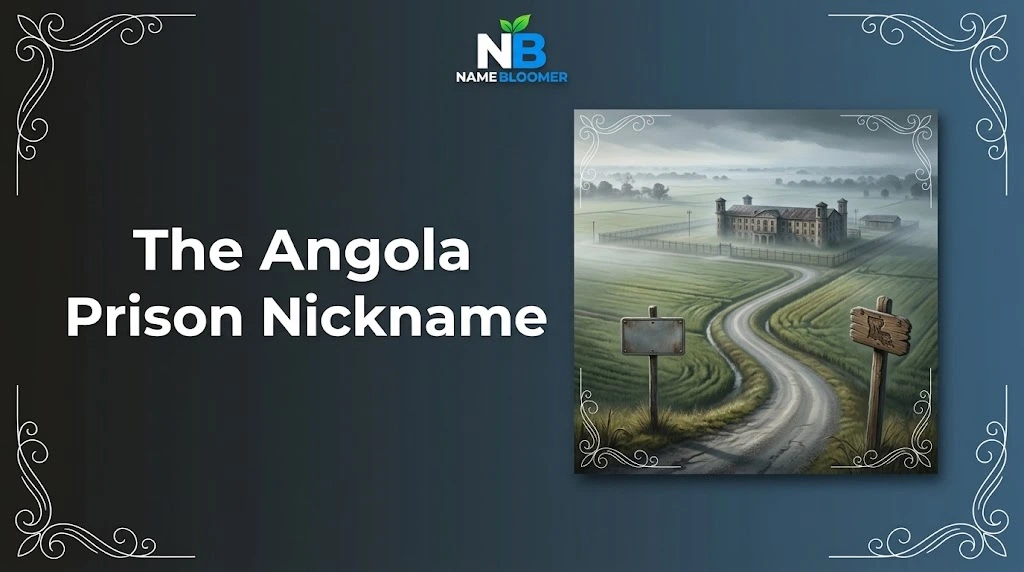
Louisiana State Penitentiary carries a heavy past. Its nicknames reflect both its size and its history, from plantation-era roots to its modern shift toward reform and rehabilitation programs today.
| Nickname | Meaning | Origin |
|---|---|---|
| Angola | Named after a former plantation | Land once tied to enslaved workers from Angola |
| The Farm | Reflects its large-scale farming operation | Inmates work thousands of acres |
| The West Feliciana Facility | Named for its home parish | Located in West Feliciana Parish |
| River Bend Prison | Sits along a bend in the river | Geographic location near the Mississippi |
| The Working Grounds | Emphasizes daily labor programs | Agricultural work required of inmates |
| The Rodeo Grounds | Known for its public rodeo event | Annual event running since 1965 |
| The Long Sentence Facility | Houses many long-term inmates | High share of lifetime sentences |
| America’s Biggest Yard | References its huge land size | One of the largest prisons by acreage |
| The Bluff Land Site | Named for the area’s terrain | Elevated ground near the river |
| The Cane Field Neighbor | Sits near old cane farmland | Regional agricultural surroundings |
| The Reform Campus | Reflects newer rehabilitation focus | Shift toward education and faith programs |
| The River Parish Site | Located in a river-adjacent parish | West Feliciana Parish location |
| The Old Plantation Grounds | Ties to its plantation-era past | Former plantation land use |
| The Security Perimeter | Reference to its strict setup | High-security infrastructure |
| The Sentence Capital | Known for its many life terms | High number of life-without-parole cases |
| The Watch Tower Site | Named for its guard towers | Perimeter security design |
| The Hope Program Site | Reference to faith-based reentry work | Modern rehabilitation initiative |
| The Levee Neighbor | Close to the Mississippi levees | Riverside geography |
| The Historic Work Farm | Long tradition of farm labor | Decades of agricultural operation |
| The Employment Hub | Major employer in a rural area | Economic role in the parish |
| The Long Yard | Reference to its sprawling layout | Large campus-style grounds |
| The Tunica Trace Site | Named for a nearby landmark | Near the Tunica Hills area |
| The Transformation Story | Known for its modern turnaround | Shift from unrest to reform |
| The Faith and Farm Site | Blends labor with faith programs | Rehabilitation approach today |
| The River Road Facility | Sits along the historic river road | Location near old plantation route |
| The Century Old Grounds | Facility with over a century of history | Long operational history |
| The Acreage Giant | Known for its massive footprint | Thousands of acres of land |
| The Parish Landmark | A well-known site in its parish | Regional recognition |
| The Guarded Farmland | Combines farming with high security | Unique agricultural-security mix |
| The Second Chance Site | Focus on inmate reentry programs | Modern rehabilitation goals |
| The Historic Work Camp | Reference to older labor practices | Decades-old prison labor system |
| The Riverbank Facility | Located along the riverbank | Proximity to the Mississippi River |
| The Rural Giant | One of the largest rural institutions | Remote, large-scale facility |
| The Long Road Home | Reference to parole and release paths | Modern release program focus |
| The Louisiana Landmark Prison | Widely recognized statewide | Historic and cultural significance |
Nicknames for Louisiana’s State Animal
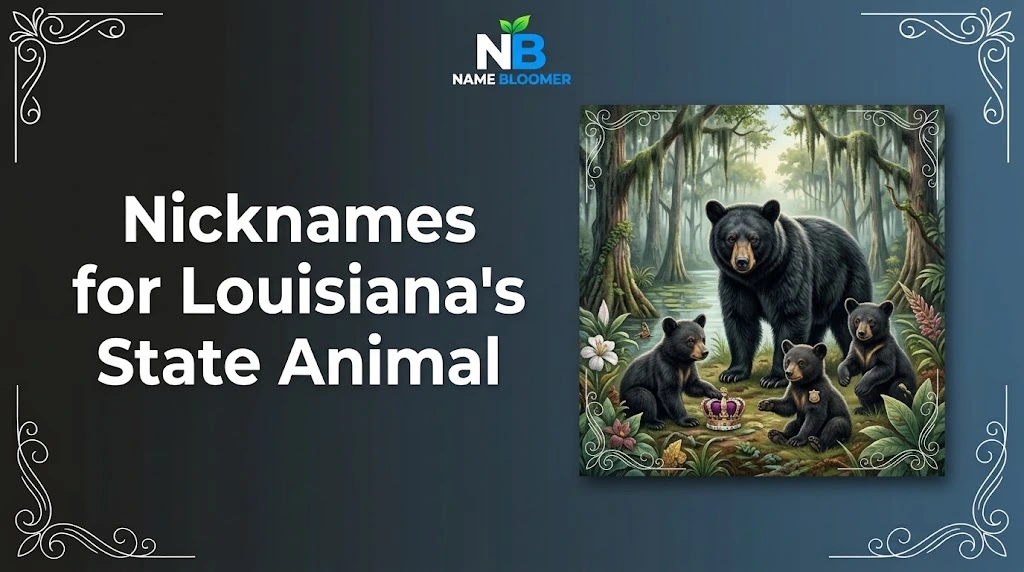
The black bear became the state animal in 1992. It lives mostly in the Atchafalaya Basin, where conservation work helped rebuild its population after years of habitat loss.
| Nickname | Meaning | Origin |
|---|---|---|
| Thicket Wanderer | Roams dense forest thickets | Preferred habitat cover |
| Basin Native | Native to the Atchafalaya Basin | Core protected range |
| Quiet Forager | Searches for food without noise | Feeding behavior |
| Comeback Species | Recovered after population decline | 1990s protection efforts |
| Root and Berry Eater | Feeds on roots and berries | Common diet pattern |
| Winter Den Builder | Builds dens for winter rest | Denning behavior |
| Tree Climber | Known for climbing tall trees | Physical skill |
| Cane Field Visitor | Occasionally spotted near farmland | Crop-adjacent sightings |
| Swamp Edge Roamer | Stays near swamp borders | Habitat boundary preference |
| Cub Protector | Fiercely guards its young | Maternal instinct |
| Night Wanderer | Most active after sunset | Nocturnal habits |
| State Symbol Bear | Chosen as the official animal | 1992 state designation |
| Oak Forest Dweller | Common in oak-heavy woodland | Preferred forest type |
| River Swimmer | Crosses rivers when needed | Swimming ability |
| Protected Species Icon | Once listed under federal protection | Conservation history |
| Trail Camera Star | Frequently caught on trail cameras | Wildlife tracking programs |
| Feliciana Native | Common in the Felicianas region | Northern habitat range |
| Timber Roamer | Wanders through timberland | Forest territory |
| Seasonal Forager | Diet changes with the seasons | Feeding adaptation |
| Quiet Giant | Large but rarely seen | Shy temperament |
| Marsh Border Bear | Lives near marsh boundaries | Mixed habitat range |
| Acorn Hunter | Feeds heavily on acorns in fall | Autumn diet pattern |
| Deep Woods Resident | Lives far from populated areas | Remote habitat choice |
| Wildlife Refuge Regular | Common in state wildlife refuges | Protected land habitat |
| Long Claw Digger | Digs for grubs and roots | Foraging technique |
| Cypress Basin Bear | Common in cypress-heavy basin land | Basin ecosystem |
| Habitat Recovery Symbol | Represents successful habitat restoration | Conservation program success |
| Silent Stalker | Moves quietly through brush | Stealthy movement |
| Corridor Traveler | Uses wildlife corridors to move | Habitat connectivity |
| Berry Season Regular | Most active during berry season | Seasonal food source |
| Parish Woods Bear | Roams forested parish land | Regional habitat |
| Conservation Success Story | Population rebuilt through protection laws | Endangered species recovery |
| Bottomland Dweller | Common in bottomland hardwood forest | Preferred wooded terrain |
| Cane Brake Native | Lives among dense cane thickets | Historic habitat type |
| State Wildlife Icon | Represents Louisiana’s wild spaces | Broad cultural symbolism |
Nicknames for Louisiana’s State Fish
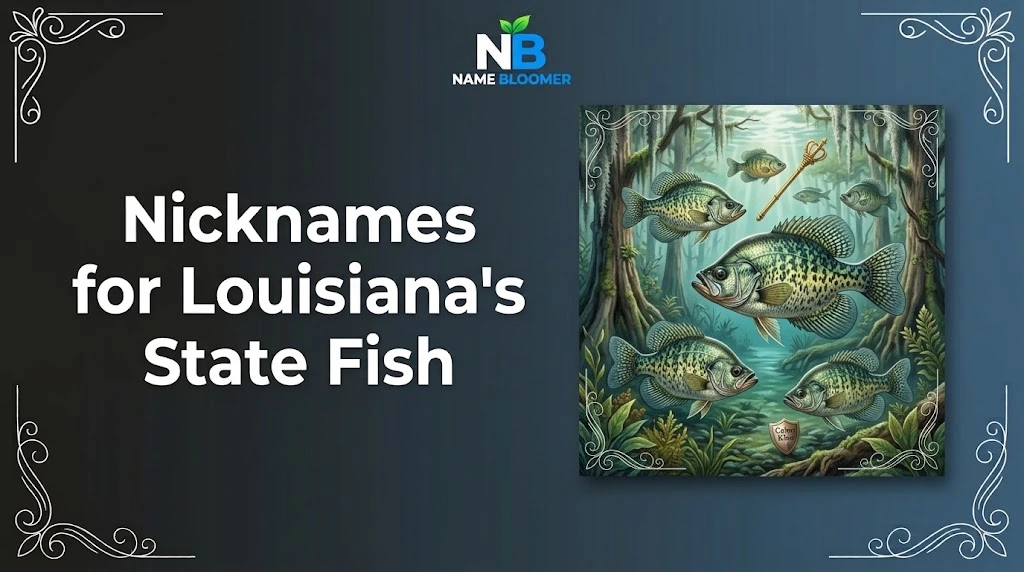
The white perch is the official state fish. Locals call it sac-a-lait, a Cajun French term tied to its pale, sweet flesh and its popularity among home anglers statewide.
| Nickname | Meaning | Origin |
|---|---|---|
| Milk Belly Swimmer | Cajun French term for white flesh | Sac-a-lait naming origin |
| Panfish Champion | Popular panfish choice statewide | Common local catch |
| Slow Water Dweller | Lives in calm, slow water | Bayou habitat |
| Silver Scale Fish | Known for its silver coloring | Physical appearance |
| Cold Weather Biter | Bites well during cooler months | Winter fishing pattern |
| Structure Lover | Hides near logs and brush piles | Cover-seeking behavior |
| Angler’s Regular Catch | One of the most caught fish | Popular fishing target |
| Shallow Spawner | Spawns in shallow water in spring | Breeding season habit |
| Sweet Flesh Fish | Prized for its mild, sweet taste | Culinary quality |
| Family Pond Fish | Common catch in small ponds | Beginner-friendly fishing |
| Net Dodger | Known for slipping past nets | Fishing challenge |
| Bayou Native Swimmer | Native to Louisiana’s bayous | Regional habitat |
| Cane Pole Catch | Often caught with simple poles | Traditional fishing method |
| Deep Hole Hider | Rests in deeper river holes | Depth preference |
| Fry Pan Favorite | A top choice for frying | Southern cooking tradition |
| School Traveler | Moves in groups through water | Group swimming behavior |
| Reservoir Resident | Common in freshwater reservoirs | Lake habitat |
| Early Bite Fish | Bites best early in the morning | Morning fishing pattern |
| Jig Bait Target | Frequently caught using jigs | Common fishing lure |
| Community Fry Fish | Popular at local fish fries | Community gathering food |
| Spring Crowd Pleaser | Draws big crowds during spawn season | Peak fishing season |
| Cypress Root Hider | Stays close to cypress roots | Habitat behavior |
| Weekend Catch | Common weekend fishing target | Recreational fishing culture |
| Light Line Fighter | Puts up a fight on light tackle | Angling challenge |
| Bottom Feeder Cousin | Feeds near the bottom at times | Feeding zone variation |
| Tournament Favorite | Popular target in fishing tournaments | Competitive fishing culture |
| Pale Fillet Fish | Known for its pale white fillets | Meat appearance |
| Marsh Pond Regular | Common in marshland ponds | Marsh habitat |
| Moonlit Biter | Some anglers claim moon affects bites | Local fishing folklore |
| Bream Bed Neighbor | Often found near bream beds | Shared habitat with bream |
| Cool Season Favorite | Most active in cooler seasons | Seasonal activity pattern |
| Local Market Fish | Sold fresh at local seafood markets | Commercial fishing presence |
| Grandpa’s Go-To Catch | A classic family fishing target | Generational fishing tradition |
| Slab Sized Prize | Large catches called slabs locally | Angler slang for big fish |
| Sunday Supper Fish | Often the centerpiece of Sunday meals | Family meal tradition |
Conclusion
Louisiana truly has a name for everything. Nature, food, sports, and history all get their own titles here, each adding a layer to the story.
Questions People Ask
What is Louisiana’s official nickname?
The Pelican State, named for its state bird.
Why is it called the Bayou State?
Because of its many slow-moving bayous.
What is the state fish?
The white perch, known as sac-a-lait.
What is the state animal?
The black bear, since 1992.
Read More Topics on Name Blommer
